
Financial Services Review: Specials Magazine

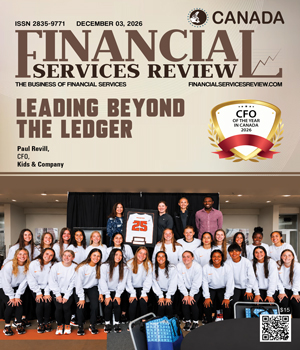
Numbers can explain where a business has been. Paul Revill, CFO at Kids & Company, is more interested in what they make possible. For Revill, finance is not simply about reporting results but understanding what drives them and using that insight to improve business decisions. Across hospitality, technology, and manufacturing, he has worked at the intersection of finance and operations, from evaluating Four Seasons properties and structuring major client deals at ADP to building the systems that support growth at Kids & Company. Today, he oversees finance, IT, enrollment, and shared services across the Canadian and U.S. businesses, working closely with operations, marketing, and sales. “Being very forward thinking means considering what can be done today to make next year better and making sure you’re allocating time to the years ahead,” says Revill. From Financial Analysis to Operational Leadership Revill holds a master's degree from the University of Waterloo and is a CPA. He began his career in U.S. tax consulting with Arthur Andersen in Toronto before spending a decade at Four Seasons. Although he initially worked in tax and international tax, he moved into an operational role that took him to properties around the world. His early responsibilities included supporting Sarbanes-Oxley requirements, working alongside property directors of finance, and examining financial and operational performance on behalf of head office. Because Four Seasons managed properties it did not mostly own, Revill had to balance the company's financial position with individual owners' interests. His operational reviews involved meeting owners, presenting findings to head office, and identifying ways to increase revenue, reduce costs, and improve efficiency. He later restructured the accounting department, reinforcing his belief that finance could do more than report results; it could help operations perform better.
Wealth Management
For over two decades, Toren & Associates has focused exclusively on asset and wealth management, becoming Canada’s first executive search firm dedicated entirely to the sector. Its practice is grounded in a deep understanding of how talent, compensation design and leadership continuity support long-term organizational trust. A Toronto-based boutique firm, Toren & Associates, helps clients attract, motivate and retain high-performing professionals. It caters to a diverse clientele, including money managers, investment counseling firms, financial planning firms, single family offices, multi-family offices and independent brokerage firms. “We identify accomplished executives and align them with roles matching their expertise in wealth management, ensuring both client and candidate needs are met,” says Mark Toren, president and CEO. Independent wealth management firms face persistent challenges in attracting and retaining senior advisory talent, often without clear visibility into how compensation structures compare across the market. As competition intensifies and succession planning becomes more urgent, many firms are forced to make critical hiring decisions without reliable benchmarks or third-party guidance..

Mergers and Acquisitions Consulting

For business owners in the manufacturing sector, mergers and acquisitions (M&A) are not just about numbers on a balance sheet—they are personal. Whether selling, merging, partnering or optimizing management structures, these decisions shape the future of their companies. This is where Jason Koo, Broker of Record at Corporate M&A Brokerage, steps in. A master of the deal, he has spent his career helping clients navigate these pivotal moments, ensuring they find the ideal path forward. Koo’s M&A journey began at a franchise business brokerage firm, but in 2000, he took a bold step toward independence. That move allowed him to focus entirely on the manufacturing sector, where he has facilitated deals in aerospace, automotive, plastics, food processing, and machinery—including elevator manufacturing and energy. His work has taken him across Canada, the U.S., South Korea, Mexico, Israel, England and Switzerland, giving him a firm grasp of industry trends and international deal-making. A sharp eye for opportunities and a deep understanding of complex transitions have made him a trusted partner for business owners looking to make their next big move. Experience and industry knowledge are only part of the equation. What truly sets Koo apart is how he applies them to serve his clients’ best interests. At the helm of Corporate M&A Brokerage, he prioritizes what is best for business owners rather than pushing quick deals. That means exploring options beyond the typical buy-and-sell playbook—like retaining partial ownership, bringing in minority investors or structuring deals to optimize retirement and tax benefits. “I focus on serving my clients by protecting and promoting their best interests. That commitment is the foundation of everything I do,” says Koo. Why Relationships Matter in Manufacturing Business Sales Manufacturing business owners face unique challenges when considering a sale or partnership. Unlike brokerage firms that operate with a more transactional, impersonal approach, Koo and his team take pride in fostering strong interpersonal relationships with their clients. From the very first meeting, they prioritize meeting clients face to face—whether that requires a short drive or a cross-country flight. This high-touch personal engagement contrasts with many other firms that rely heavily on digital communication, leaving business owners feeling disconnected from the process. Selling a business is often an emotional experience tied to years of hard work and dedication. By prioritizing personal relationships and open communication, Koo’s firm ensures that clients feel supported and confident throughout the process, even if they decide not to proceed with a sale.
Valuation Services
In a world awash in automation and artificial intelligence, where business owners are bombarded with valuation numbers generated in seconds, Troy Valuations stands firmly on something much rarer: expert judgment backed by defensible evidence. “At Troy Valuations, we do not just give you a number— we give you the ‘why’ behind the number,” says Caroline Troy, Owner and Chartered Business Valuator. “We use real data, show our math, and make sure our conclusions stand up in negotiation, arbitration, or court. There is no black box here.” Troy Valuations works with clients navigating complex legal, financial, and strategic decisions—whether in litigation, divorce, succession planning, or sale. Its approach blends deep industry knowledge, reliable data, and professional rigor. The result? Business valuations that are clear, credible, and rocksolid under scrutiny. A Methodical, Three-Angle Approach to Value At the heart of Troy Valuations’ methodology is triangulation— an expert-led strategy that cross-validates a business’s value from three distinct but interrelated angles: income, market, and asset-based approaches. The income approach determines what a business is worth based on its future earning potential. “Think of it like holding a winning lottery ticket that pays out over time,” Caroline explains. “We calculate what that future stream of income is worth today—because in finance, timing matters as much as totals.” The market approach analyzes recent transactions of similar businesses, applying industry-specific multiples based on size, geography, and sector dynamics. “We do not just pull comps,” Caroline says. “We ask: Does this multiple make sense for this business? Would someone really pay that in today’s market?” Finally, the asset-based approach accounts for both tangible and intangible assets. Whether it is machinery, intellectual property, patents, or goodwill, Troy Valuations carefully evaluates how each component contributes to the total business value—especially important for companies built on innovation or specialized knowledge.

Payment Solution

Balancing Innovation, Security and Customer Experience in Digital Banking
Emmelda Lawrence, Sr. Manager, Digital Servicing, Fremont Bank
Financial Planning/Retirement

Helping Clients Prepare For Life, Not Just Retirement
Sheri Perkins, Chief Wealth Officer, Head of Wealth Management, Citadel Credit Union
Wealth Management

Redefining the Role of the Wealth Advisor
Thomas M. Dowling, CFA, CFP®, CIMA®, Head of Wealth Management, Alliance Global Partners of the Lowcountry
Claim Adjusting

Communicating Complex Insurance Risks Clearly and Effectively
Stevi Siber-Sanderowitz, Esq., Senior Communications Counsel and Vice President, Insurance Analytics, SterlingRisk Insurance
Financial Planning/Retirement

The Strategic Evolution of Retail Planning
Jessica Cole, Director of Strategic Planning, Effy Jewelry

IN MY OPINION
CPA Firms
When Finance Stops Reporting and Starts Guiding the Business
Robin Boone, EVP of Finance Technology, PENNYMAC

LAST WORD
CPA Firms
Finance as a Driver of Business Insight and Transformation
Carol Diaz, Managing Director, Finance, Technology and Operations GBS, Scotiabank
IN FOCUS

Driving Investment Clarity with Financial Planning Services in Canada
Financial planning services help optimize tax efficiency, offer professional financial guidance, and support long-term stability and disciplined financial management.
Importance of Estate Planning in Canada: Key Benefits and Insights
Estate planning helps in making better financial decisions, provides peace of mind, and reduces legal delays and disputes.
EDITORIAL
Financial Leadership in a Changing Business Landscape
Financial leadership is still evolving as organizations grapple with shifting business priorities, operational demands and the increasing complexity of the decisions they have to make. This edition of Financial Services Review Canada looks at the role of financial leadership in terms of driving performance, enhancing strategic alignment and managing growth. The coverage is broad with contributions from the areas of financial management, executive talent and technology enabled operations.
At the forefront is Paul Revill, CFO of Kids & Company, recognized as CFO of the Year in Canada 2026. The award is recognition of financial leadership within an organization where financial discipline has to be in step with the organization’s priorities. The cover story looks at the critical role of the CFO in balancing financial discipline with business objectives, in making the right decisions and in ensuring the right resources are in place to achieve the organization’s objectives.
The edition also features Toren & Associates, awarded Top Wealth Management Executive Search Firm in Canada 2026. This shows the importance of executive search within the wealth management sector, whereby the sourcing of leadership talent plays such an important part from an organizational skills, strategy and business development perspective. The specialization of the firm puts the focus on the connection between the hiring of leaders and the changing requirements of the financial organizations.
Further perspectives come from Robin Boone, Executive Vice President Finance Technology at PENNYMAC and Carol Diaz, Managing Director, Finance, Technology and Operations GBS at Scotiabank. Their respective leadership roles bring finance, technology and operational perspectives into the conversation, highlighting the intersection of financial strategy, organizational execution and technology leadership.
Together, this edition looks at what effective financial leadership really is beyond the traditional stuff of stewardship, into strategic influence, talent and operational direction. We invite you to take a look at the stories and see what the leadership thinking is in Canada's financial services.
