
Financial institutions and design-build firms are playing an increasingly important role in helping banks, credit unions, insurance providers, investment firms, and other financial organizations modernize their physical infrastructure while improving project efficiency and cost management. As customer expectations shift and financial institutions accelerate digital transformation, physical branches and corporate facilities are evolving to support better hybrid banking models, improved customer experiences, increased operational flexibility and stronger security.

Weekly Brief
×Be first to read the latest tech news, Industry Leader's Insights, and CIO interviews of medium and large enterprises exclusively from Financial Services Review
Top Financial Institution Design-Build Firms 2026
Financial institution design-build firms help banks and credit unions create functional branch and workplace environments through integrated project delivery. With a focus on space planning, construction quality, security readiness and brand alignment, they support better customer experience and more efficient facility development.
Solutions
Staywood Design
Building Financial Spaces that Connect Community, Brand, and Purpose
Ashton Brooks, Co-Owner
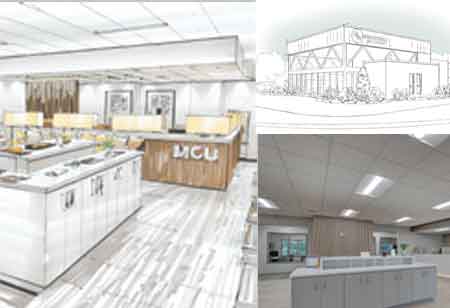
Designing a financial institution involves far more than planning a branch layout or creating an attractive interior. Banks and credit unions need facilities that balance security with evolving technology, changing customer expectations, operational efficiency, and the need to create spaces that reflect their brand identity.
State of Industry
Deep Dive
Designing Financial Branches around How Banking Actually Works
Branch projects for banks and credit unions often go wrong before drawings become detailed. A footprint is approved without fully accounting for transaction patterns, cash equipment, employee sightlines and the institution’s service model. The finished space may look current yet create cramped work areas, security blind spots, expensive rework and delayed openings.
Leadership Perspective

Texas Capital
Beyond the Hard Market: The Next Chapter for Excess & Surplus Insurance
Scott Reynolds, CPA, CFA, Managing Director, Financial Institutions Group - Head of Insurance
Scott Reynolds joined Texas Capital in May 2025, bringing extensive experience serving large corporate and commercial middle market clients across the financial institutions group (FIG). He now leads the firm's nationwide insurance industry coverage strategy, serving insurance carriers, retail and wholesale distributors, and insurance services firms. Previously, he was Managing Director, Senior Credit Officer at Regions Bank/Regions Securities, where he led the firm's inaugural FIG industry coverage effort. Earlier roles include Director, Wholesale Credit Products at Bank of America/Merrill Lynch. Scott holds BBA and MSF degrees from Texas A&M University and is a CPA, CFA and FINRA Series 7, 24, 63 and 79 license holder.
Financial Institution Design-Build Firms Info
Q1
What Do Top Financial Institutions Design-Build Firms Do?
Top Financial Institutions Design-Build Firms plan, design and deliver physical environments for banks, credit unions and other financial organizations. Their work can include new branches, renovations, expansions and relocations, while addressing architectural requirements, construction coordination, security, employee workflows and customer experience. Because financial facilities have specialized operational needs, the design-build approach brings planning and construction into a coordinated process. This can help institutions align physical spaces with service models, operational priorities, brand expectations and long-term growth plans.
Q2
What Services Are Included in Financial Institution Design-Build Projects?
Projects handled by Top Financial Institutions Design-Build Firms may include site evaluation, space planning, architectural design, engineering coordination, construction management and renovation or new-build execution. Financial branch design can also involve security planning, technology integration, accessibility considerations, interior design and workflow analysis. Some financial institution construction projects require early evaluation of whether remodeling an existing location, expanding it or relocating offers the strongest long-term fit. The scope therefore extends beyond constructing a building to coordinating decisions that affect how the facility will operate after completion.
Q3
Why Is Demand Growing for Modern Financial Institution Design-Build Services?
Demand is being shaped by changes in how customers use physical branches and how financial institutions define their role. As routine transactions increasingly move to digital channels, physical locations are being reconsidered as places for advice, relationship building and more complex financial interactions. Top Financial Institutions Design-Build Firms help institutions adapt existing facilities and develop new environments around these changing expectations. Growth strategies, aging facilities, evolving technology and the need for more flexible service models can also drive renovation, relocation and new construction decisions.
Q4
How Are Top Financial Institutions Design-Build Firms Evaluated?
Decision-makers often evaluate financial institution design firms based on their understanding of banking operations, specialized facility requirements and ability to manage a project from early planning through construction. Relevant experience with security, customer circulation, employee workflows and financial technology can be important. Institutions may also assess communication, project coordination, budget management and the ability to adapt designs to a specific service model. Strong providers combine technical design and construction expertise with an understanding of the operational decisions that shape a facility's long-term usefulness.
Q5
How Can Financial Institution Design-Build Services Create Value?
The value of Top Financial Institutions Design-Build Firms often lies in helping institutions make better decisions before construction costs are committed. Coordinated planning can reduce the risk of layouts that create inefficient workflows, underused space or expensive changes later in the project. Thoughtful financial branch design can also support security, employee productivity, customer comfort and brand consistency. By connecting real estate, design and construction decisions, the design-build model can give leadership a clearer view of how a physical investment supports operational performance and future growth.
Q6
What Role Do Innovation and Expertise Play in Financial Facility Design?
Innovation in Top Financial Institutions Design-Build Firms is not limited to architectural appearance. It involves understanding how technology, changing service preferences and evolving branch models affect the physical environment. Modern financial facility design may need to accommodate digital tools, flexible service areas, private conversations and different approaches to customer interaction. Specialized expertise helps providers balance these requirements with security, accessibility and construction realities. The strongest outcomes come from combining technical knowledge with the ability to translate an institution's operational and customer needs into a space that can remain relevant as those needs change.
