A featured contribution from Leadership Perspectives , a curated forum for banking, financial services, and fintech leaders, nominated by our subscribers and vetted by the Financial Services Review Editorial Board.

Wingspire Equipment Finance
Building Credit Discipline through Growth
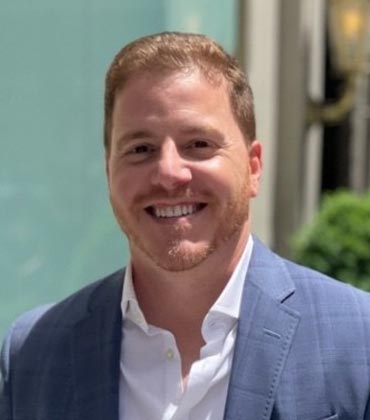
Marcelo Sarago
For Marcelo Sarago, Chief Credit Officer at Wingspire Equipment Finance, responsible lending begins with understanding what lies behind the numbers. In large-ticket equipment finance, a company's financial statements provide only part of the picture. The equipment it depends on, the strength of its operations, the quality of its management, and the behavior of its financial sponsors all influence whether a transaction can withstand difficult conditions.
Sarago oversees the credit function from underwriting standards and approvals to funding sign-offs and portfolio monitoring. He leads a team of ten, chairs the credit committee, and serves on the executive investment committee. His responsibilities have become particularly important as Wingspire expands its financing activity among middle-market, private equity-backed businesses.
The company funded more than $700 million in 2025, a 66 percent increase over the previous year. For Sarago, such growth creates an obligation to preserve underwriting standards rather than relax them to accommodate higher volume. His approach rests on three priorities: maintaining consistent credit discipline, building a portfolio that withstands scrutiny from lenders and investors, and involving credit teams early enough to help structure workable transactions.
Finding Opportunity without Compromising Risk
Sarago does not view business growth and prudent risk management as competing objectives. Instead, he looks for financing structures that address borrowers' requirements while protecting the lender's capital. When a transaction falls outside standard parameters, his team considers adjustments to repayment terms, advance rates, funding stages, or asset-backed structures before deciding whether to proceed.
“Growth built on weak credit isn't growth; it's delayed loss,” he says.
That principle guides decisions across different industries and financing requirements. In one transaction, Wingspire provided $22 million to a private equity-backed utility services platform. The company, which provides vegetation management, right-of-way clearing, and emergency storm response, needed financing for equipment acquired and placed into service during the fourth quarter of 2025.
Wingspire structured financing around the assets' expected useful lives, aligning the arrangement more closely with the customer's operating requirements. The transaction illustrates Sarago's preference for solutions grounded in the economic value and practical purpose of the underlying equipment.
Relationships also matter. Wingspire has financed one technology-sector client with more than $130 million over eight years, releasing funds in tranches aligned with the company's rollout schedule. Such arrangements require consistent underwriting and an understanding of how financing supports a client's longer-term plans.
Combining Analytics with Experience
Data plays a central role in Wingspire's credit process. The company uses a proprietary risk-rating model, early-warning indicators, and concentration reports to monitor portfolio performance and identify emerging concerns. Investments in systems have also improved the flow of information and the consistency of reporting to lenders and investors.
“Growth built on weak credit isn't growth; it's delayed loss.”
Yet Sarago recognizes that analytical models cannot capture every variable in equipment finance. A spreadsheet may not establish how essential an asset is to a borrower's operations, how a sponsor might respond when a portfolio company encounters difficulties, or what specialized equipment could recover in a distressed sale.
His approach combines quantitative analysis with experienced judgment. Models help identify areas requiring attention; underwriters then investigate the business, management team, collateral, and operating environment. Disagreement between data and experience becomes an opportunity to ask harder questions before committing capital.
Scaling Processes While Preserving Standards
Sarago's focus on disciplined growth has also shaped Wingspire's internal processes. As financing volume increased, he introduced tiered approval authority so routine transactions could move faster while complex deals received appropriate committee attention. Standardized credit memoranda helped ensure that each transaction presented a consistent, complete account of its risks and merits.
These changes improved turnaround times for smaller transactions from approximately two weeks, while the underwriting team expanded from five to ten professionals. The company reports zero losses on its commenced portfolio.
Consistency has also supported Wingspire's capital markets activity. Its third securitization raised more than $400 million from 29 investors. For Sarago, reliable underwriting across different portfolio vintages helps investors evaluate the quality of the assets backing those transactions.
The articles from these contributors are based on their personal expertise and viewpoints, and do not necessarily reflect the opinions of their employers or affiliated organizations.
