Financial Services Review: Specials Magazine

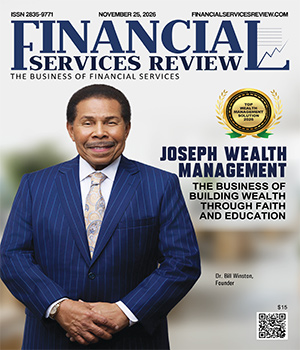
Raised in Tuskegee, Alabama, Dr. Bill Winston, founder of Joseph Wealth Management, learned early that financial opportunity was something you had to create. His parents could not provide much financially, so he learned to make his own money. In college, he combined a tennis scholarship with teaching and other entrepreneurial pursuits, including starting a band that took him from New York to Jamaica. He went on to serve six years in the military, inspired by the Tuskegee Airmen he had seen as a child, before spending 15 years at IBM, where he developed a deeper understanding of business and customer needs. He eventually left IBM after what he describes as a call to preach and teach, becoming a pastor. As his church grew, so did his conviction that ministry and economic empowerment were connected. That conviction took shape when a corporate executive asked what Winston could do to help Black male youth in Chicago. He returned seven days later with a program that received $40,000 in funding to start. The program continued for two years and received further financial support during that time. The young people learned basic mathematics, business and commerce, selling eggs in their neighborhoods and opening bank accounts. They were taught how to become entrepreneurs. That youth program eventually became the foundation for the start of the Joseph Business School five years later, extending Winston’s focus from teaching young people about money to equipping entrepreneurs to build businesses. The school eventually expanded across the United States and internationally. The same idea shaped his next major venture: a bank intended to help the Christian community build greater economic capacity and to help entrepreneurs find access to capital to start and scale their businesses. But the 2009 financial crisis put the institution under severe pressure, and after several years Winston ultimately had to let it go.
Financial Compliance
Welcome Home Financial Partners isn’t your typical financial firm. This family-owned, fiduciary company believes retirement shouldn’t just be managed—it should be designed. Founded by Ralph and Tim Short, a father-and-son team, Welcome Home helps everyday people build a life they can truly enjoy after work ends. “Most firms want to talk about products,” says Ralph Short, president and co-founder. “We’d rather talk about people—what their next chapter looks like and what gives it meaning.” That philosophy drives everything they do. The firm acts as a “life architect,” helping clients map out income strategies that prepare for taxes, inflation and major life changes. Whether someone is selling a business, cashing out real estate or planning for future healthcare costs, the goal is always the same: to make life after work secure, simple and fulfilling. Turning Confusion into Clarity At Welcome Home, clarity isn’t a buzzword— it’s a process. Every new relationship begins with two simple meetings that turn financial clutter into clear direction. In the first meeting, clients often arrive with stacks of 401(k) statements, annuities and insurance policies—and no real understanding of how they all fit together. Ralph and Tim start by unpacking both the numbers and the story behind them. They ask about daily life goals, retirement dreams and worries that keep people up at night. Hidden issues often surface—like rising healthcare costs, tax traps or income gaps after a spouse passes away. “Most people think they need an investment plan,” says Tim Short, vice president. “What they really need is a roadmap—an honest look at what’s working, what’s missing and what needs to change.” By the end of that first visit, clients leave with the same financial numbers—but a whole new sense of confidence.

Investment Services

For many founder-owners, the traditional path to private equity capital has always involved a difficult trade-off—sell a majority ownership stake to gain the desired liquidity but relinquish control to the new investors. For decades, successful founder-owners have accepted that trade-off between liquidity and control. But that loss of control carries real risks. A change in ownership can disrupt company culture and can shift priorities away from the long-term vision that built the business in the first place. In some cases, it can even limit the very growth that the new capital was meant to accelerate. Is there a better solution that doesn’t require this trade-off? New Heritage Capital, a private equity firm that partners exclusively with founder- and entrepreneurial-led businesses, offers a different approach. At the center of that difference is the Private IPO®, a proprietary structure that turns capital into a partnership. It provides founders with meaningful liquidity, often up to 80 percent of enterprise value, while allowing them to retain voting control and a much greater share of the future value. Unlike the traditional leveraged buyouts, the Private IPO® has a governance model built on trust and collaboration. Founders continue leading their companies, with New Heritage retaining protective rights over key business decisions, such as new debt, mergers or sales. In addition to the shared governance model, the Private IPO® allows founder-owners to earn up to a 25 percent incentive equity plan based on future equity values at the next liquidity event. That incentive plan is double the typical leveraged buyout offer and truly rewards founder-owners that believe in the future value of their business. “We built New Heritage around the idea that growth capital should empower founders,” says Mark Jrolf, co-founder and managing senior partner. “An individual who has built a company from scratch to 50 million dollars has developed capabilities that should be harnessed, not diminished.” That philosophy has guided New Heritage since its inception. Before establishing the firm in 2006, co-founders Jrolf, Charlie Gifford and Nickie Norris, had worked together for years, going back to 1999. That rare continuity shaped the mindset that is behind every new partnership New Heritage forms.
CPA Firms

Look Inward Before Looking Onward
Elizabeth Ferrell, Assistant Corporate Controller, Kroger
CPA Firms

Driving Financial Excellence In Agribusiness Growth
Maximiliano Proano, Senior Director of Finance, Pronaca
Wealth Management
Financial Literacy Advocate
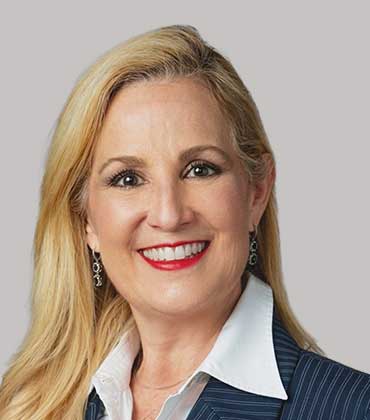
Elisa S. Luque, EVP and Director of Trust & Wealth Management, American National Bank of Texas
Financial Marketing
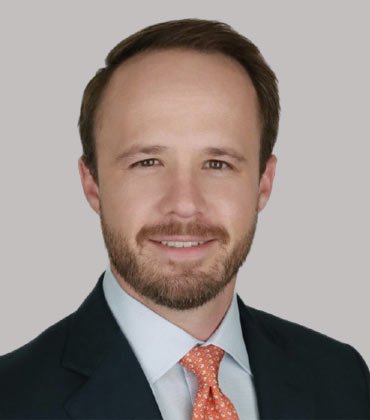
How Finance Becomes the Glue in Enterprise Decisions
Jeremy Knop, Chief Financial Officer, EQT Corporation
Business Loan
Managing the Financial Impact of Cyber Risk
David Finz, Esq., RPLU, Senior Vice President, Alliant Insurance Services

IN MY OPINION
CFO Services
Where AI Innovation Meets Accountability
Meg von Haartman, PhD, CTA, Director of AI and Machine Learning, eFinancial

LAST WORD
FinTech
The Constant Balancing Act of IT Leadership
Voytek Janisz, Senior Vice President, IT AmTrust Financial Services, Inc.
IN FOCUS

Improving Credit Decisions through Intelligent Underwriting Systems
AI-driven underwriting improves credit assessment efficiency, strengthens risk evaluation, and supports consistent lending decisions through responsible automation.
Digital Finance: Strengthening Access to Flexible Funding Options
Digital platforms, automated assessments and data analytics are expanding access to funding while helping lenders evaluate applications and manage financial risk.
EDITORIAL
Purpose-Driven Leadership across Financial Services
Leadership in today’s financial services requires that individuals be able to translate technical skills into tangible results for customers and operations while maintaining trust and accountability. This edition of Financial Services Review explores how educational wealth management approaches, technology leadership and artificial intelligence drive the industry.
Joseph Wealth Management earns recognition as Top Wealth Management Solution 2026 for offering an investment management solution alongside financial education and biblically based stewardship. Founded by Dr. Bill Winston, the firm assists people who may consider the market difficult to comprehend with comprehending capital, aligning their investments with tangible goals like education, retirement and legacy and taking part in decision-making. The Joseph Storehouse Treasury Program provides a conservative fund strategy and part of the fees is used in social development projects like Joseph Business School and financial literacy. The company has progressed from its previous entrepreneurship program to the goal of reaching one billion dollars in assets under management.
In speaking about failures within technology, Voytek Janisz, Senior Vice President of IT at AmTrust Financial Services, notes that most of the problems are people and alignment-related issues, not technical. He balances the conflicting forces of innovation and stability with planned pilots, rollbacks and operational baselines, along with a learning process through rotations and blameless post-mortems. Meg von Haartman, PhD, CTA, Director of AI and Machine Learning at eFinancial, notes that production reliability, governance and monitoring need much more time than development of models. She claims that responsible AI is a base, not an obstacle.
These contributions affirm that lasting progress rests on leaders who bridge technical execution with clear purpose and disciplined oversight. Explore the edition further to examine the complete articles and the practical approaches driving the industry forward.
